About HDPE Lined Ball Valve
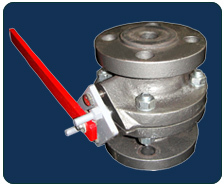
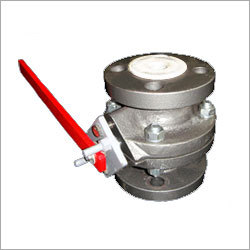
HDPE Lined Ball Valve
Dimensional Data
| Size | DN 25 | DN 40 | DN 50 | DN 80 | DN 100 |
| F mm | 48 | 69 | 88 | 118 | 151 |
| L max mm | 127 | 165 | 178 | 203 | 229 |
Lining Material : PTFE / PP (Poly Propyline) / HDPE
Test
- Hydro Test At 10 Kg/cm2
- Spark Test At 10 Kv
- Air Leak Test 3 Kg/cm2
Superior Corrosion ResistanceThe HDPE lining within these ball valves provides excellent protection against corrosion from aggressive chemicals, water, acids, and alkalis. This makes them particularly suitable for environments where chemical resistance is essential, ensuring long-term operational durability and reduced maintenance costs for critical industrial applications.
Versatile Application RangeEngineered for use across diverse sectors, the HDPE Lined Ball Valve can be found in the chemical industry, water treatment plants, pharmaceutical manufacturing, and fertilizer production. Its robust design and adaptability to various corrosive media ensure reliable performance in both routine and demanding service conditions.
Compliant and Customizable DesignManufactured with full bore, flanged connections that comply with ANSI B16.5, DIN, and IS standards, these ball valves can be tailored in port sizes from 15 mm to 300 mm and withstand pressures up to 150#. The two-way channel and floating ball design promote straightforward installation and dependable sealing efficiency.
FAQs of HDPE Lined Ball Valve:
Q: How does the HDPE lined ball valve maintain resistance to corrosive chemicals?
A: The HDPE (High Density Polyethylene) lining offers a chemically inert barrier that shields the cast iron body from corrosive media such as acids, alkalis, and aggressive chemicals, greatly enhancing the valves lifespan in harsh environments.
Q: What are the primary usage areas for this ball valve?
A: This valve is suitable for use in the chemical industry, water treatment facilities, pharmaceutical processes, and in fertilizer plants, where resistance to corrosion and reliable flow control of various media are critical requirements.
Q: When should I choose a full bore, floating ball structure?
A: A full bore, floating ball structure is ideal when minimal flow restriction and a lower pressure drop are needed, especially in processes where maintaining the integrity of the transported fluid or efficient flushing is important.
Q: Where can the HDPE Lined Ball Valve be installed?
A: It can be installed in any pipeline system requiring corrosion resistance for water, acids, alkalis, or chemicals, with flanged end connections suitable for systems built to ANSI, DIN, or IS specifications.
Q: What is the process for installing this valve in an industrial setup?
A: Installation involves aligning the flanged ends with the corresponding pipeline, ensuring gasket placement for sealing, and tightening bolts to secure the valve. Manual operation allows for easy commissioning without special power requirements.
Q: What are the practical benefits of using an HDPE lined ball valve over standard metal valves?
A: Compared to unlined metal valves, HDPE lined ball valves offer superior corrosion resistance, reduced contamination risk, longer service life, and lower maintenance, making them cost-effective for demanding chemical applications.





 Send Inquiry


 Send Inquiry
 Send Inquiry
 Send SMS