About Lined Flange High Pressure Bellows
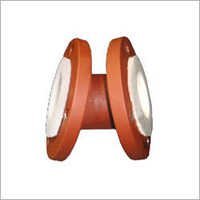
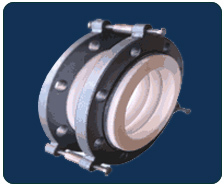
Lined Flange High Pressure Bellows
Material Specifications and Dimensional Standards:
PTFE Bellow :
Bellow: PTFE in compliance with ASTM D 1457, white in colour Molded from Virgin PTFE and machined precisely.
Split and back-up flange:
IS 2062 Grade B. ANSI B16.5 ASA150 # for drilled holes Duly powder coated with three tie rods to safeguard axial movement
Operating temperature:
PTFE -29 to 210 deg. C
Operating pressure:
Vaccume to 6 kg /cm. sq. Maximum pressure allowable is restricted with respect to temperature
Hydrostatic pressure test:
10 kg / cm. sq
Spark test:
10 KV
Versatile Design for Demanding ApplicationsEngineered to accommodate a wide range of media and movement types, these lined flange bellows are suitable for critical uses in chemical, pharmaceuticals, steel, and power industries. Their industrial-grade construction ensures flexibility, leakproof operation, and resistance to corrosion and vacuum, meeting diverse operational challenges.
Superior Material Compatibility and PurityWith PTFE/FEP/PFA linings boasting over 99% purity, these bellows protect process integrity and ensure exceptional resistance to aggressive chemicals. The smooth surface and precise molding or injection lining techniques provide unyielding safety in handling reactive or high-purity substances across sensitive industries.
Reliable Performance and Safety StandardsLined bellows are hydro tested at 1.5 times the working pressure to guarantee structural integrity. The design follows major international standards (DIN, ANSI, JIS, IS), and each unit ships with protective flange caps for transport. No routine maintenance is needed, offering operational peace of mind and enhanced process uptime.
FAQs of Lined Flange High Pressure Bellows:
Q: How should Lined Flange High Pressure Bellows be installed for optimal movement and sealing?
A: Install the bellows between flanged pipe sections, aligning to permit the required axial, lateral, and angular movement. Proper flange drilling (DIN/ANSI/JIS) must match the existing piping, and flange face surfaces should be clean to ensure a perfect seal with the smooth, corrosion-resistant liner.
Q: What media are compatible with the PTFE/FEP/PFA lining of these bellows?
A: The lining is chemically inert and suitable for a wide array of corrosive fluids, including strong acids, alkalis, solvents, as well as corrosive gases and liquidsmaking them ideal for chemical transfer, pharmaceutical, and petrochemical processes.
Q: When is a multi-ply bellow design recommended over a single-ply?
A: Multi-ply bellows are typically chosen for higher pressure ratings and greater flexibility, as multiple plies distribute stress and enhance durability. Single-ply may suffice for lower pressures or simpler movement requirements.
Q: Where are lined flange bellows most commonly used?
A: They are most commonly installed in chemical plants, pharmaceutical manufacturing, steel processing, power generation facilities, and applications involving acid or solvent transfer due to their high chemical resistance and leakproof design.
Q: What is the typical maintenance process and requirement for these bellows?
A: Thanks to the high-purity, corrosion-resistant lining, these bellows are essentially maintenance-free. No periodic maintenance is required under proper application, reducing operational downtime and lifecycle costs.
Q: How does the bellow lining contribute to reduced noise and vibration in process lines?
A: The flexible, lined design dampens vibrations originating from pumps, valves, and other equipment, minimizing transmission of noise and mechanical oscillation along the pipeline.
Q: What standards and customization options are available for flanged ends and overall dimensions?
A: Flanged ends can be manufactured as per DIN, ANSI, JIS, IS, or custom requirements. Bellows can be tailored to specific lengths and diameters (DN 25 mm to DN 600 mm) as specified by customer order, including colour and material selections.




 Send Inquiry


 Send Inquiry
 Send Inquiry
 Send SMS