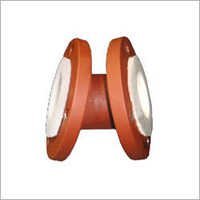
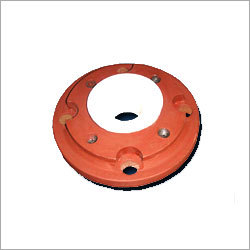
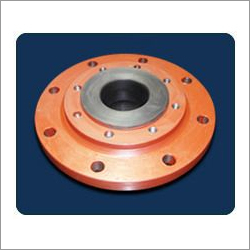
About PTFE Lined Reducing Flange
PTFE Lined Reducing Flange
Dimensional Data
| Size | DN 40 X DN 25 | DN 50 X DN
40/25 | DN 65 X DN
50/40/25 | DN 80 X DN
65/50/40/25 | DN 100 X DN
80/65/ 50/40/25 |
| A mm | 40 | 40 | 40 | 40 | 40 |
| Size | DN 150X DN 100/80/65/50/40/ 25 | DN 200X DN 150/100/80/65
50/40/25 | DN 250X DN 200/150/100/80/
65/50/40/25 | DN 300X DN 250/200/150/ 100/80/65/50/ 40/25 |
| A mm | 50 | 50 | 50 | 50 |
Lining Material : PTFE / PP (Poly Propyline) / HDPE
Test
- Hydro Test At 10 Kg/cm2
- Spark Test At 10 Kv
- Air Leak Test 3 Kg/cm2
Technical Specification
| Test | Test Hydro Test At 10 Kg/cm2 Spark Test At 10 Kv Air Leak Test 3 Kg/cm2 |
| Colour | orange coated |
Engineered for Demanding EnvironmentsPTFE lined reducing flanges are designed to withstand aggressive chemicals and high-pressure applications, making them suitable for critical industries. Their robust construction and seamless PTFE lining help minimize contamination and guarantee long-term durability in harsh process conditions.
Comprehensive Compatibility and StandardsManufactured to leading global standards including ANSI B16.5, DIN, JIS, and BS, these flanges offer flexibility for both new systems and retrofits. Custom sizing and shape options ensure that they fit a wide range of pipeline configurations, accommodating diverse industrial requirements.
FAQs of PTFE Lined Reducing Flange:
Q: How does the PTFE lining benefit reducing flanges used in corrosive fluid handling?
A: The 100% virgin PTFE lining provides chemical inertness, preventing the flange from reacting with corrosive fluids. This prolongs service life, reduces maintenance needs, and maintains product purity, making it ideal for industries that require stringent resistance to aggressive substances.
Q: What is the manufacturing process for these PTFE lined reducing flanges?
A: These flanges are produced using molding or lining techniques where PTFE is uniformly applied to the internal surfaces of the carbon steel or stainless steel base. This process creates a seamless, impermeable barrier that resists corrosion and contamination.
Q: When should I choose a reducing flange with PTFE lining over a standard flange?
A: PTFE lined reducing flanges are recommended when working with highly corrosive or high-purity fluids, or when a size transition is required between different pipeline sections. They provide reliable performance where unlined flanges may degrade or contaminate contents.
Q: Where can these flanges be installed for optimal performance?
A: These products are best installed in chemical plants, pharmaceutical facilities, water treatment plants, and any industrial setting that requires robust, corrosion-resistant connections for transferring hazardous or reactive fluids.
Q: What are the available size and pressure options for these flanges?
A: They are available in a broad range of sizes from 1 x up to 12 x 6 (DN25x15DN300x150), and in pressure classes of PN10, PN16, and 150#, covering most standard pipeline requirements.
Q: How do I ensure the correct grade and material are selected for my application?
A: Selection depends on the nature of the fluid and operating environment. Choices include carbon steel (ASTM A105) and stainless steel (ASTM A182 F304/F316), each lined with virgin PTFE, ensuring compatibility with various chemicals and processes.





 Send Inquiry


 Send Inquiry
 Send Inquiry
 Send SMS